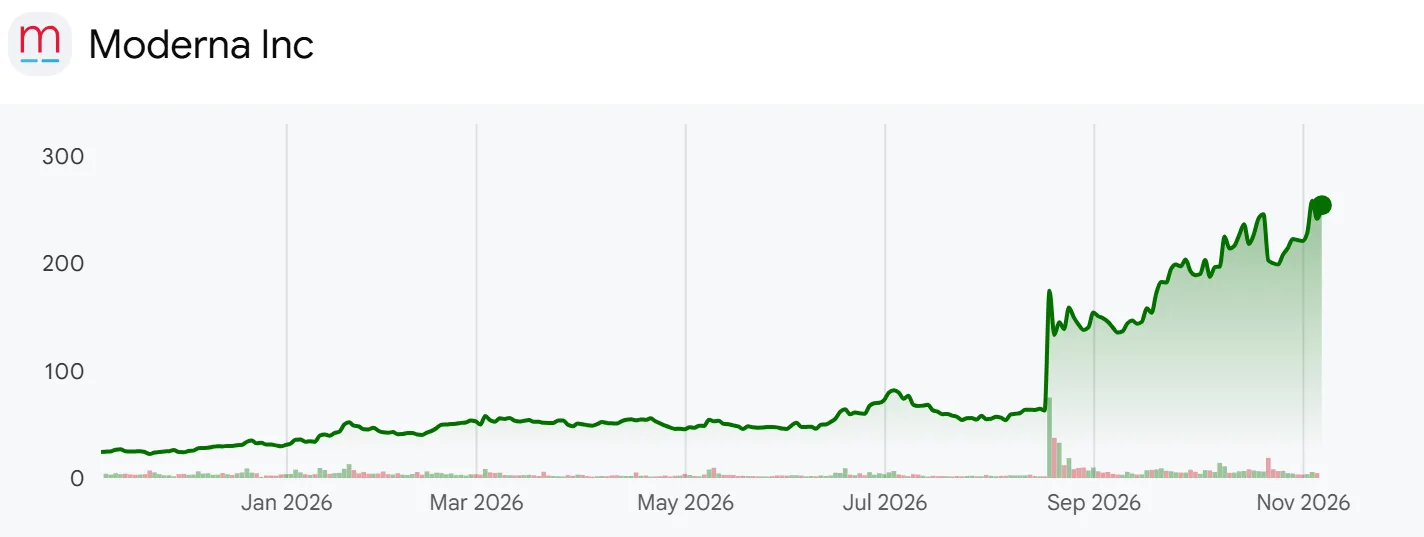
Moderna (NASDAQ: MRNA) trades at $254.19, up +303.7% from $62.96 on August 18, the day before Moderna and Merck announced that intismeran autogene had succeeded in Phase 3. Since August 18, Moderna’s market value has risen by $77.38 billion, 2.7 times the $28.55 billion gain at Merck, which splits intismeran costs and profits with Moderna 50/50. In the third quarter Moderna also posted GAAP net income of $162 million, its first profit since the third quarter of 2024.
Moderna is a Cambridge, Massachusetts biotech that makes COVID-19, RSV and flu vaccines from messenger RNA (mRNA). Its fiscal year ends in December. Multiplying $254.19 by the 404.62 million shares on the cover of the 10-Q (as of October 30) gives a market value of $102.85 billion. Working backward from the raised full-year revenue outlook, fourth-quarter revenue will be -42.7% to -14.0% lower than a year earlier, so the third-quarter profit is unlikely to carry into the next quarter.
To test whether that market value is paying for a recovering vaccine business or for intismeran, I lined up the Q3 2026 earnings release, the Q3 10-Q, the 32-page Q3 earnings presentation, the November 6 call transcript and 40 earnings releases going back to 2019. Two limits apply: the Phase 3 figures come from the first interim analysis, so overall survival has not been reported, and Merck’s market value also reflects the rest of a much larger company.
Moderna one-year share price chart
Revenue Split and US Vaccination Data in the Q3 Deck
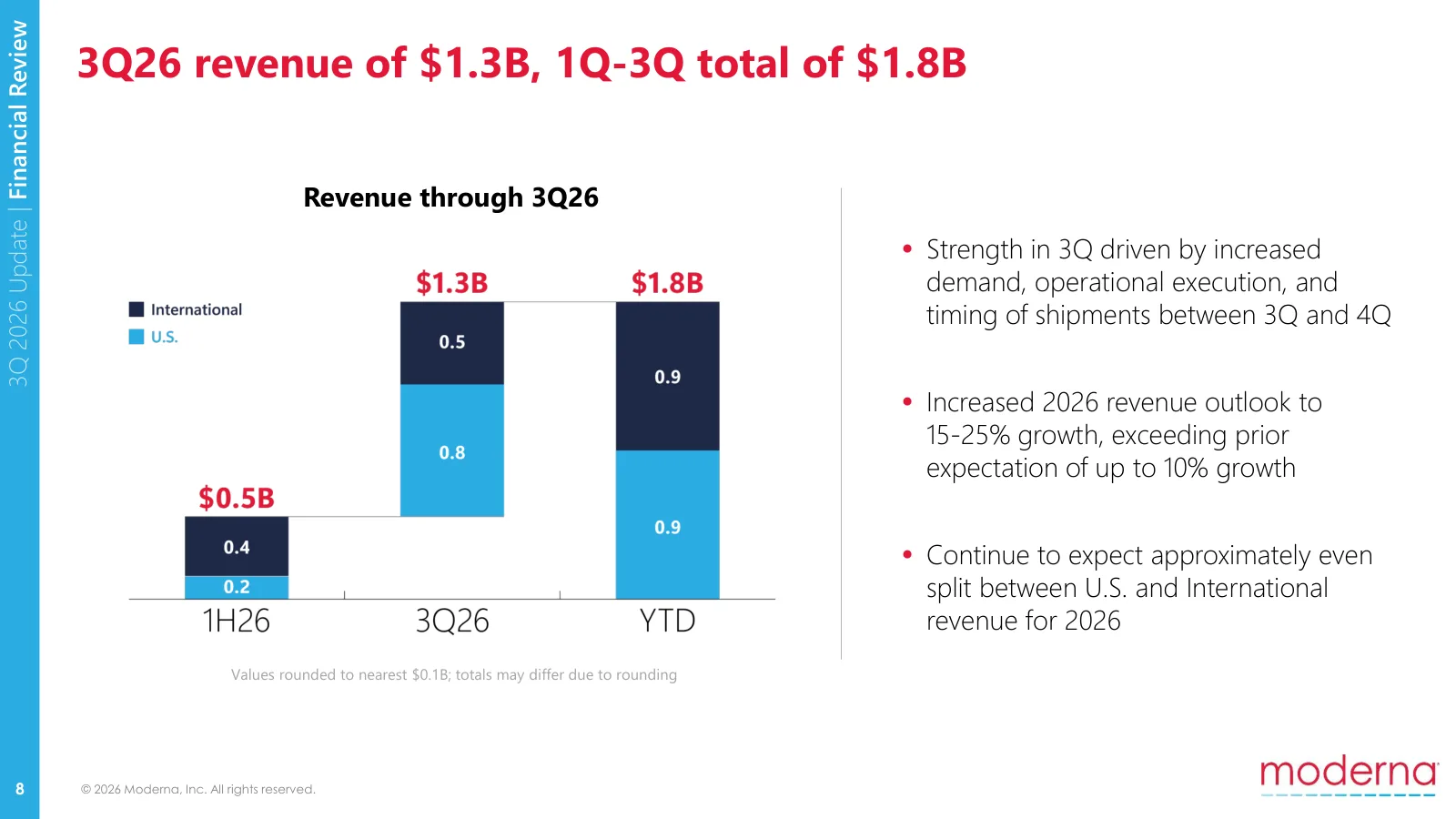
Page 8 of the presentation splits third-quarter revenue of $1.3 billion into $0.8 billion from the US and $0.5 billion from international markets. The unrounded release figures are $780 million and $533 million. Revenue for the first nine months was $1.8 billion, $0.9 billion from each side, after a first half of $0.4 billion international and $0.2 billion US. Moderna credited the quarter to higher demand, operational execution and the timing of shipments between the third and fourth quarters, and raised its full-year outlook from growth of up to +10% to +15% to +25%. Nine-month revenue of $1.847 billion was +45.9% above the $1.266 billion of a year earlier.
Q3 deck page 8 with US and international revenue and the nine-month total
The 10-Q footnote on net product sales tells a narrower story. US product sales were $771 million, -1.4% from $782 million a year earlier. Europe went from $16 million to $314 million and the rest of the world from $175 million to $188 million, so $298 million of the $300 million increase in product sales came from Europe. Management said both the US and international markets beat expectations, yet US product sales fell. CFO James Mock said on the call that “Year to date international revenue of $900 million is already $200 million ahead of the full year we delivered in 2025.”
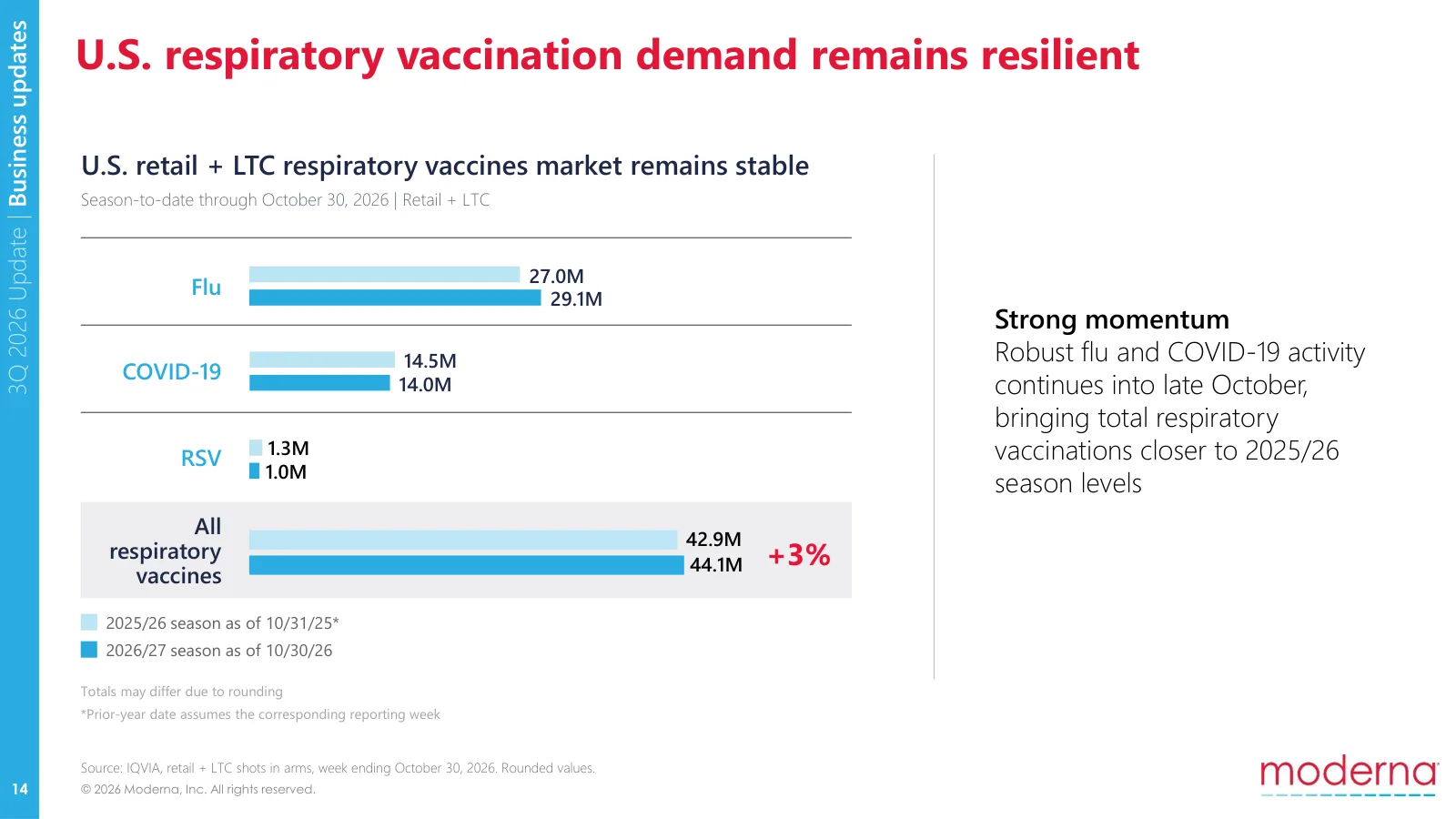
Page 14 says US respiratory vaccinations in retail pharmacies and long-term care reached 44.1 million through October 30, +3% from 42.9 million, and calls demand resilient. By product, flu rose +7.8% from 27.0 million to 29.1 million while COVID-19 fell -3.4% from 14.5 million to 14.0 million and RSV fell -23.1% from 1.3 million to 1.0 million. President Stephen Hoge said COVID-19 shots were trending slightly behind last season but that October momentum suggests the season could end flat.
Q3 deck page 14 with US respiratory vaccinations by product
COVID vaccines were 97.7% of Moderna’s product sales in the quarter. The flu vaccine mFLUSIVA was approved in August, after the annual contracting cycle, so this season is a limited launch, and Mock described flu as relatively immaterial for now. The 3% market growth came mostly from flu, where Moderna sells almost nothing yet.
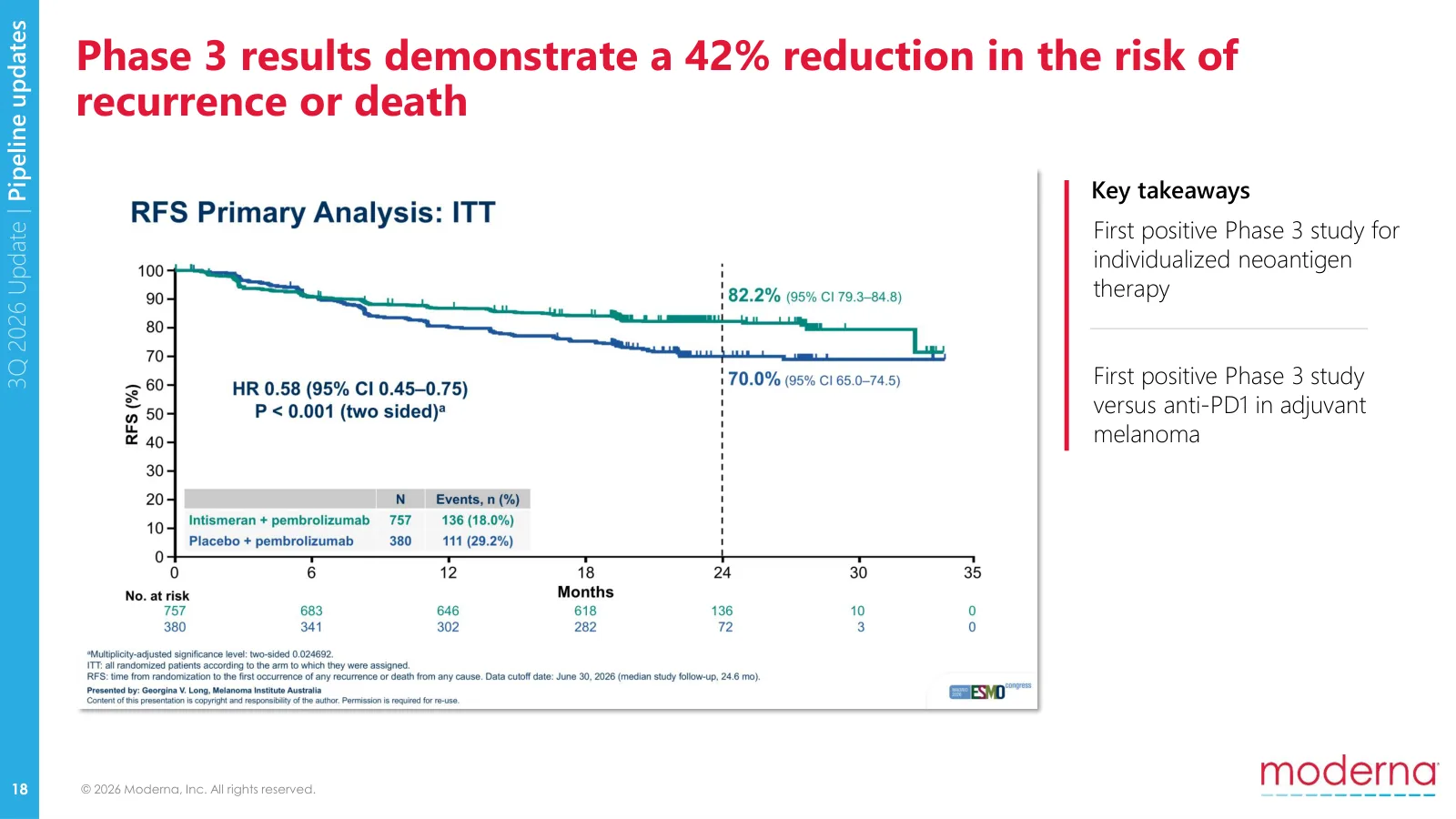
Page 18 shows the INTerpath-001 results presented at the European Society for Medical Oncology (ESMO) congress in October. The trial randomized 1,137 patients with resected high-risk stage IIB to IV melanoma 2 to 1 to intismeran plus Keytruda (757) or Keytruda alone (380). The combination cut the risk of recurrence or death by 42% (hazard ratio 0.58, 95% CI 0.45 to 0.75), and two-year recurrence-free survival was 82.2% versus 70.0%. There were 136 events (18.0%) in the combination arm and 111 (29.2%) in the control arm over a median follow-up of 24.6 months. The risk of distant metastasis or death fell 38% (hazard ratio 0.62).
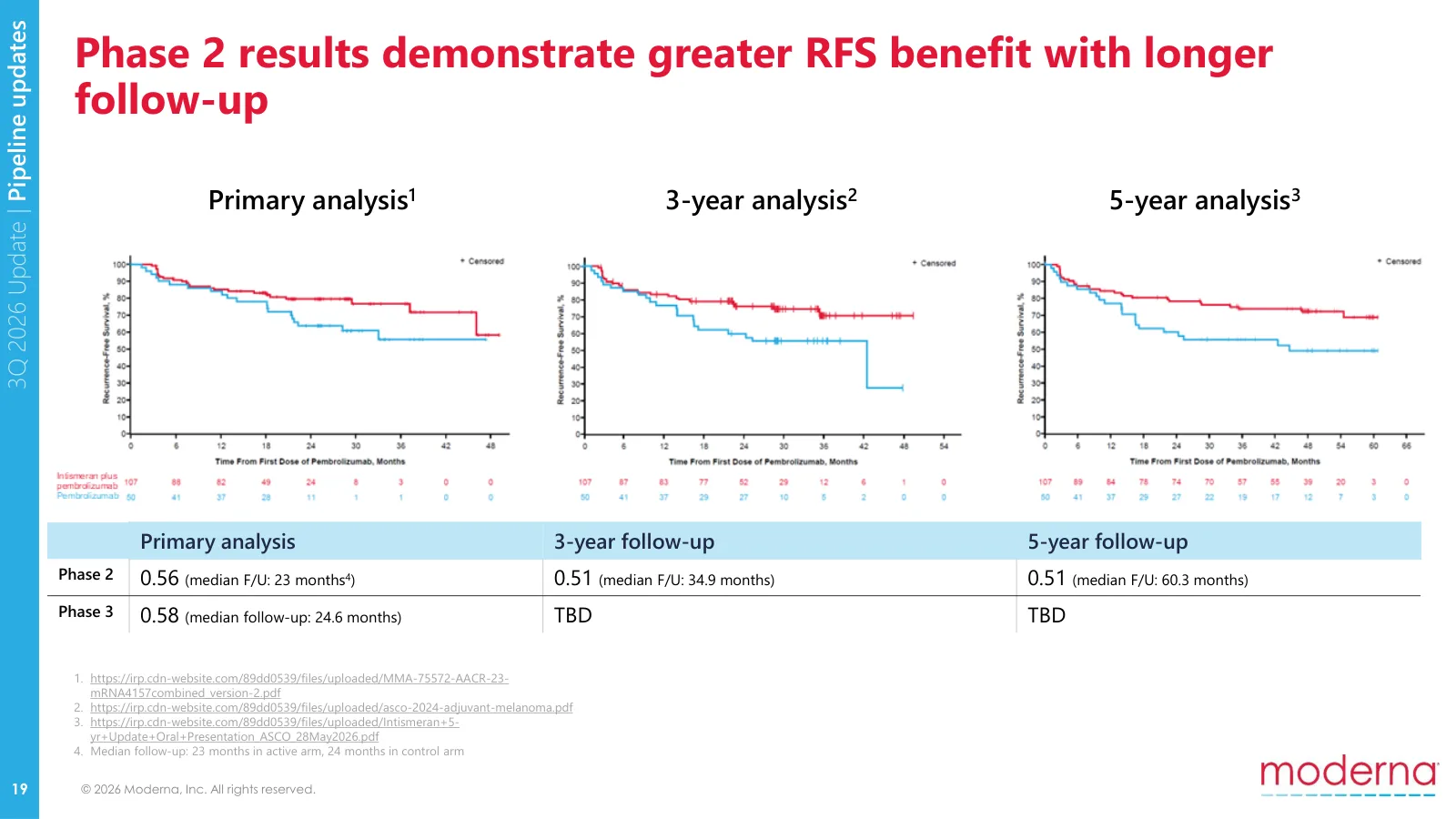
Page 19 places Phase 2 and Phase 3 side by side. The Phase 2 study had 157 patients, 107 on the combination and 50 on Keytruda alone, about one-seventh the size of Phase 3. Its hazard ratio moved from 0.56 at the primary analysis to 0.51 at three years and 0.51 at five years, and the Phase 3 primary analysis of 0.58 is close to the Phase 2 starting point. Chief Development Officer David Berman said the company is optimistic that the Phase 3 benefit will strengthen with longer follow-up as it did in Phase 2. Page 20 shows a modified intent-to-treat (mITT) analysis that drops patients who relapsed or withdrew before their first intismeran or placebo dose, with a hazard ratio of 0.51 and two-year survival of 84.2% versus 70.4%. Berman said this analysis “shows the true treatment effect of Intismeran,” but the primary endpoint remains the 0.58 in all randomized patients.
Q3 deck page 19 with Phase 2 and Phase 3 hazard ratios
Berman also noted that 0.58 matches the effect Keytruda itself showed against placebo in the same setting (KEYNOTE-054). Asked by Goldman Sachs whether part of the effect came from the lipid nanoparticle (LNP) that carries the mRNA, he said an MD Anderson retrospective analysis making that claim had not been replicated and that a Memorial Sloan Kettering analysis found no effect.
Own calculation (deck page 18): A 12.2 percentage point gap in two-year recurrence-free survival means about 8.2 patients treated for every recurrence or death prevented over two years. Keytruda-related adverse events of interest occurred in 36% of the combination arm and 35% of the Keytruda arm.
The Bull and Bear Case for Moderna Stock
The bull case rests on approval and costs. Moderna aims to finish the biologics license application this year and hopes for approval in 2027, and the adjuvant lung cancer Phase 3 is fully enrolled. R&D spending is falling from $4.845 billion in 2023 to about $2.7 billion in 2026, low enough that a quarter with concentrated vaccine shipments can now be profitable.
The bear case rests on the fourth quarter and the multiple. The implied fourth-quarter revenue is lower than a year ago and product sales still depend on COVID vaccines. The share price is above the top of the $25 to $245 analyst target range in market data, and the $133 consensus target is -47.7% below the price. Targets are chasing the stock.
Outside view (Piper Sandler, October 26): Raised its price target from $77 to $230 and kept an Overweight rating. A day later William Blair cut its rating from Outperform to Market Perform.
From the COVID Vaccine Peak to the Phase 3 Win
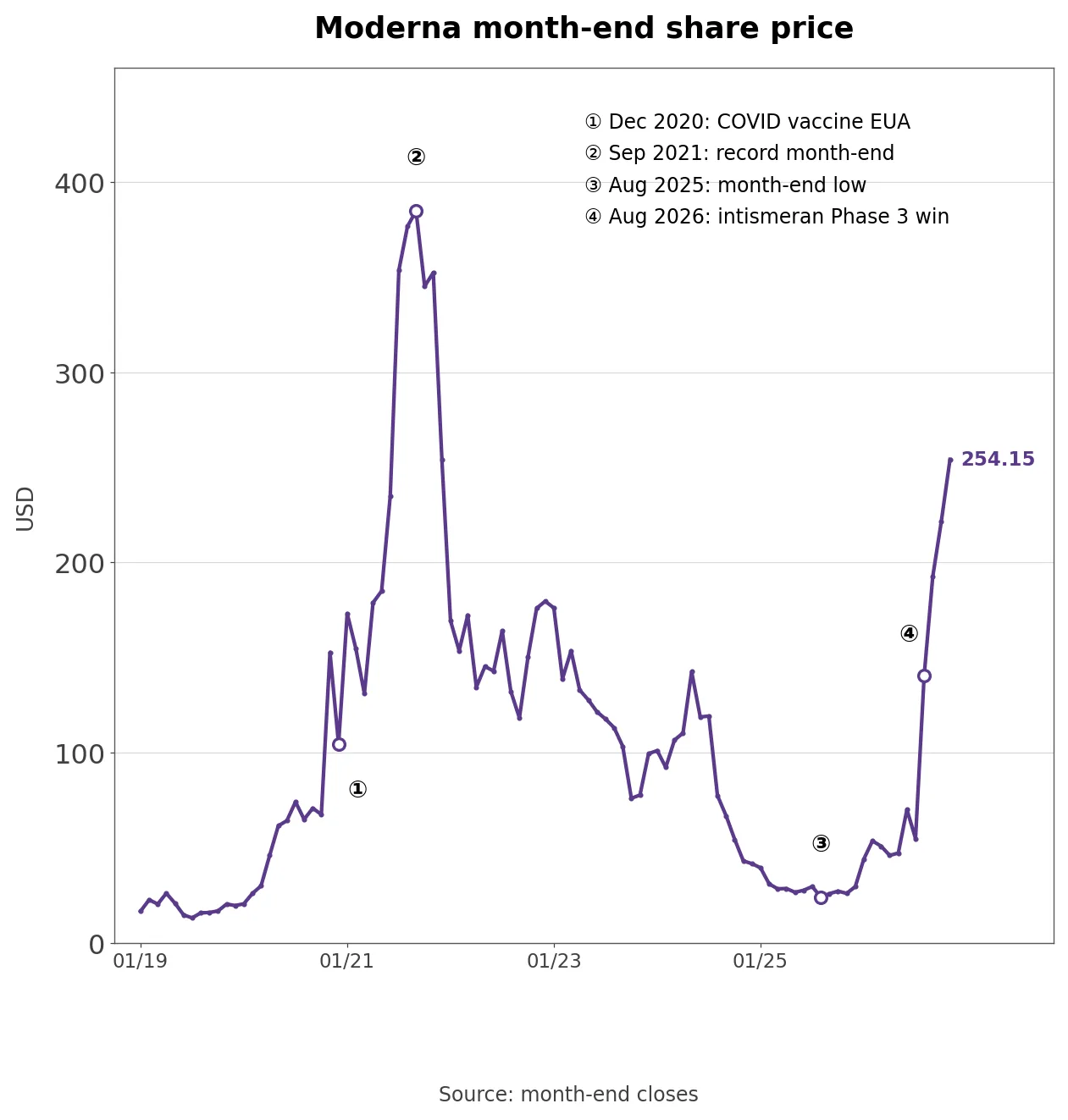
Moderna listed on Nasdaq in December 2018 and began meaningful product sales after its COVID-19 vaccine received US emergency use authorization in December 2020. Annual revenue went from $803 million in 2020 to $18.471 billion in 2021 and $19.263 billion in 2022, and the month-end share price peaked at $384.86 in September 2021.
Moderna month-end share price over 95 months with four dates
As COVID demand faded, revenue fell to $6.848 billion in 2023, $3.236 billion in 2024 and $1.944 billion in 2025, which is 10.1% of the peak. The RSV vaccine mRESVIA, approved in 2024 and now cleared in 44 countries, brought in only $39 million in the first nine months of 2026. The stock fell four years in a row from 2022, and the August 2025 month-end close of $24.09 was the lowest since 2022, when price to book was 0.99 and the market gave the pipeline nothing above book value. On August 19 the stock rose +177.0% in one session, and it is up +714.7% in 2026. That was the day the market started pricing Moderna as a cancer drug developer instead of a COVID vaccine maker.
Why Did Moderna Gain 2.7 Times What Merck Gained?
Merck and Moderna announced the Phase 3 result together before the market opened on August 19. That day Moderna rose from $62.96 to $174.38 and Merck rose +12.6% from $135.17 to $152.20. Moderna has since reached $254.19, while Merck is at $146.73, +8.6% above August 18.
Own calculation (10-Q cover and market data): Multiplying Moderna’s $191.23 gain by the 404.62 million cover shares gives a $77.38 billion increase in market value. Merck’s $11.56 gain times 2.47 billion shares gives $28.55 billion. Moderna’s increase equals 39.8 times its 2025 revenue of $1.944 billion.
The two companies split intismeran development costs and profits worldwide, generally 50/50. The market added 2.7 times as much value to Moderna’s half as to Merck’s. Merck is a $361.97 billion company with trailing revenue of $67.38 billion, so intismeran is a small part of its value, and its share price also carries other variables such as the 2028 expiry of the US compound patent on Keytruda. At Moderna the only other business that can explain the market value is COVID vaccines. Moderna’s net intismeran expense was $95 million in the third quarter and $293 million in the first nine months, so the program is still a cost.
Shipment Timing Behind the Q3 Profit
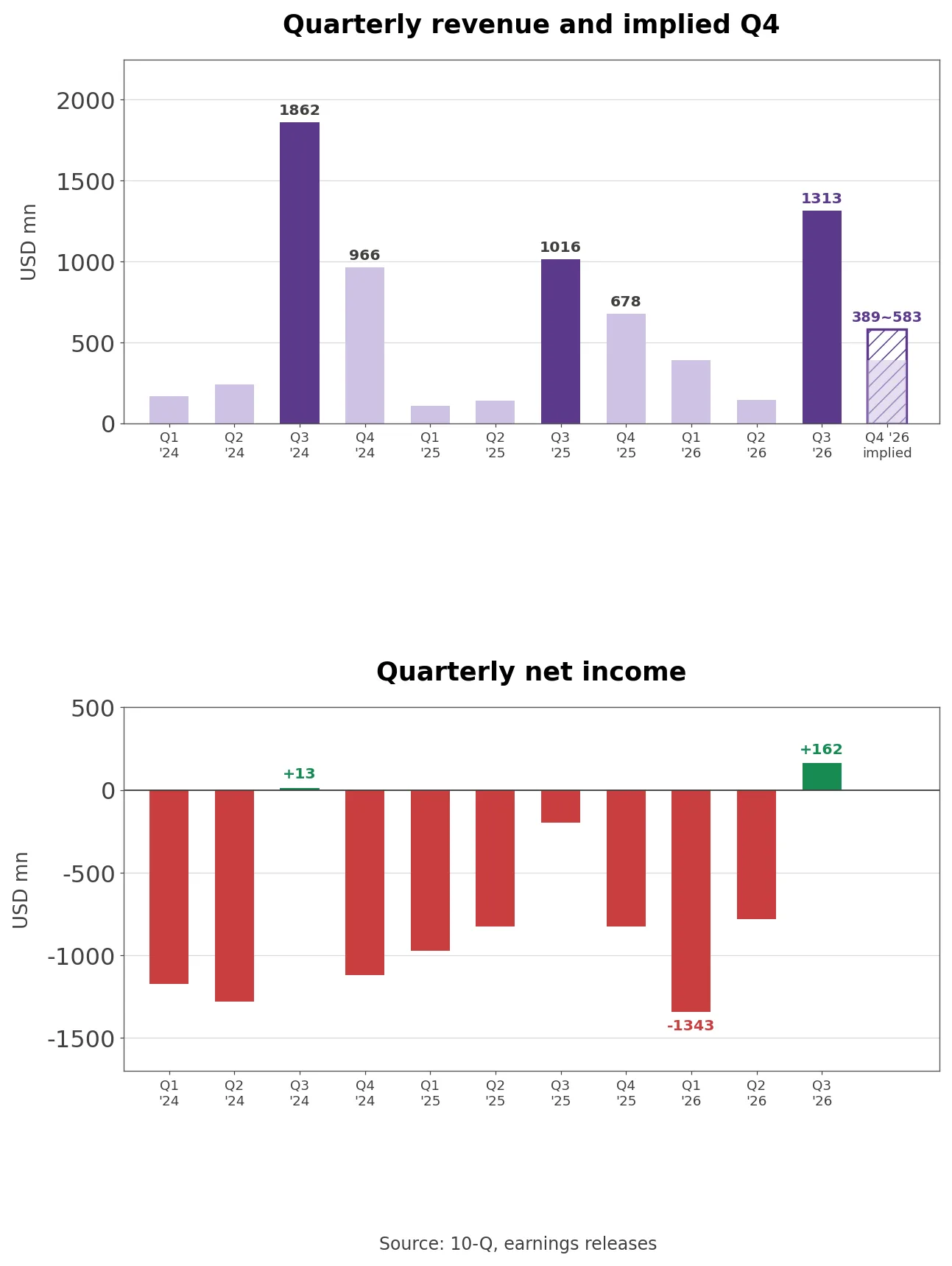
The $162 million of third-quarter net income came from $130 million of operating income plus $62 million of interest income. Two years earlier, third-quarter revenue was higher at $1.862 billion, but operating expenses of $1.932 billion left an operating loss of -$70 million. In the latest quarter revenue was -29.5% lower at $1.313 billion, while operating expenses fell -38.8% to $1.183 billion. R&D was $583 million, -27.2% from a year earlier.
Moderna quarterly revenue and net income over 11 quarters with the implied Q4 range
Working backward from the raised outlook of +15% to +25% growth on 2025 revenue of $1.944 billion, fourth-quarter revenue would be $388.6 million to $583.0 million, below the $678 million of a year earlier. Mock listed shipment timing among the reasons the third quarter beat expectations. When a Bank of America analyst asked how much of the raise came from timing, he said only that growth was broad-based across the US and international markets. In the fourth quarter of 2025 Moderna had revenue of $678 million and a net loss of -$826 million, and it expects SG&A to rise again in the fourth quarter.
At September 30, $1.235 billion, or 47.4%, of $2.608 billion in gross receivables was set aside for chargebacks, discounts and fees. Net receivables of $1.367 billion equal 104.1% of third-quarter revenue, up from $184 million at the end of 2025. The release says most third-quarter sales “remained uncollected at quarter-end,” and operating cash flow for the nine months was -$2.715 billion.
Conversion Terms of the $3 Billion Convertible
On September 1 Moderna issued $3.0 billion of 0% convertible senior notes due March 1, 2032. Each $1,000 converts into 4.7487 shares, a conversion price of $210.58, 47.5% above the August 27 pricing-day close of $142.77. Full conversion would create about 14.25 million shares, or 3.5% of the cover share count, rising to about 21 million in limited circumstances. The conversion conditions were not met as of September 30.
The share price of $254.19 is +20.7% above the conversion price. Moderna spent $329 million on capped calls with a cap of about $392, so below that level the capped calls offset the shares created by conversion.
Company disclosure (Q3 release): Cash and investments rose to $8.0 billion from $6.9 billion at the end of June. The notes brought in $2.6 billion net, while $950 million went out for the Arbutus and Genevant LNP patent settlement. The year-end cash outlook rose to $8.1 billion to $8.3 billion from $4.7 billion to $5.2 billion, or $5.5 billion to $5.7 billion excluding the note proceeds.
Own calculation (Q3 10-Q balance sheet): Cash of $1.195 billion plus current and non-current investments of $6.781 billion gives $7.976 billion. Subtracting $2.958 billion of convertible notes and $591 million of long-term debt leaves net cash of $4.427 billion.
How Moderna Makes Money From Respiratory Vaccines
Moderna had five approved products at September 30: the COVID-19 vaccines Spikevax and mNEXSPIKE, the RSV vaccine mRESVIA, a flu and COVID combination vaccine sold as mCOMBRIAX in Europe and mCOFLU in Canada, and the flu vaccine mFLUSIVA. mNEXSPIKE, launched in the third quarter of 2025, is the next-generation COVID shot whose uptake Mock credited for US growth. The combination vaccine won European Commission approval in April 2026 but had not been sold by the end of September, and Moderna awaits FDA guidance on refiling in the US. mFLUSIVA has full approval for ages 50 to 64 and accelerated approval for 65 and older. US sales come mainly through retail pharmacies and long-term care, and international sales mostly through government contracts.
Of $1.273 billion in third-quarter product sales, COVID vaccines were $1.244 billion, or 97.7%, and RSV $29 million. By region the US contributed $771 million, Europe $314 million and the rest of the world $188 million. Moderna points to long-term strategic partnerships with the UK, Canada and Australia as the basis of international growth, and in September it signed a five-year COVID vaccine agreement with a manufacturer in Mexico. Other revenue of $40 million comes from grants, collaborations and royalties.
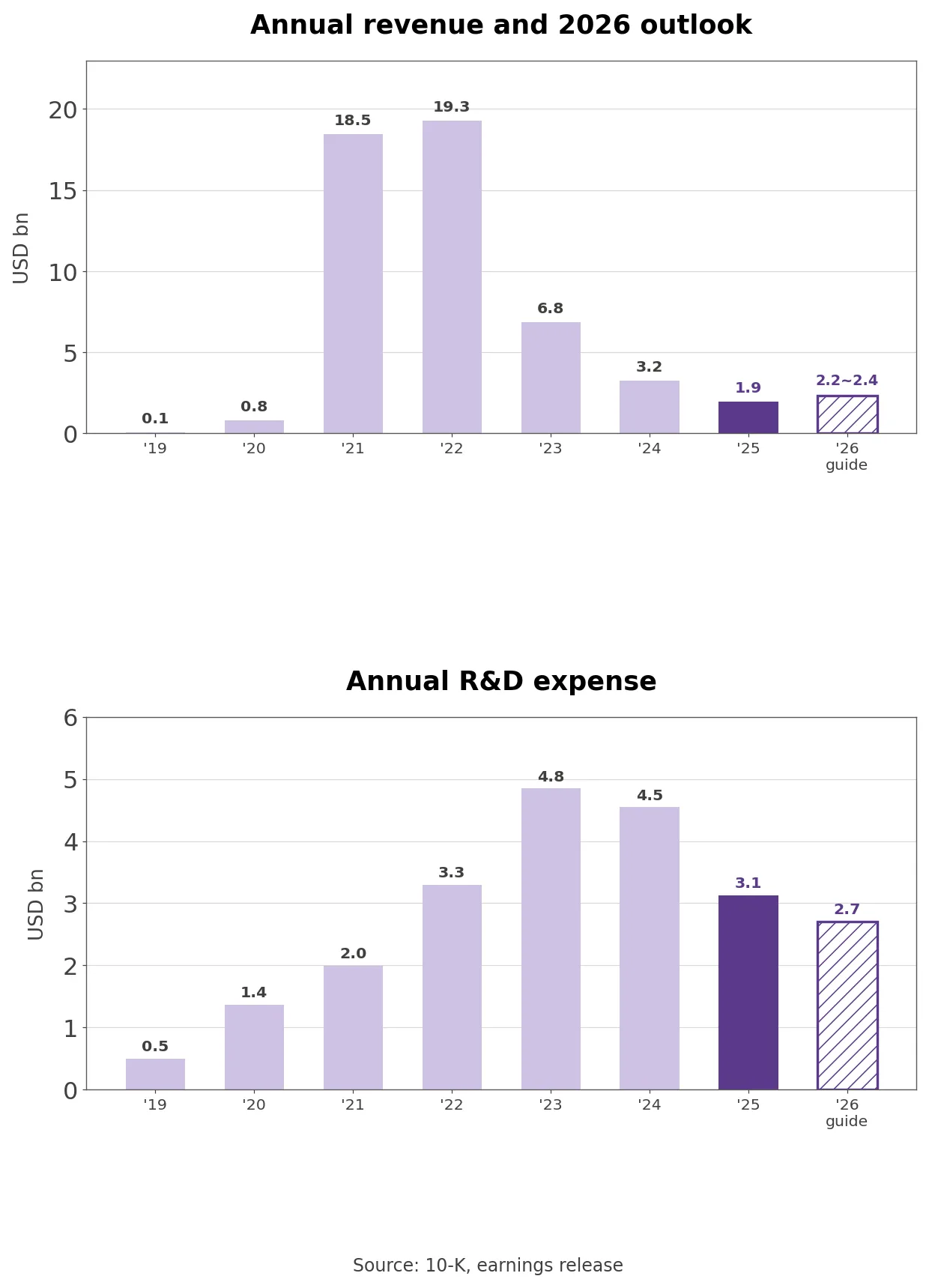
Moderna annual revenue and R&D expense with the 2026 outlook
Costs peaked in 2023. R&D guidance of about $2.7 billion for 2026 is -44.3% below the $4.845 billion of 2023, and SG&A is about $1.0 billion. Full-year cost of sales of about $1.7 billion includes the $0.9 billion settlement charge, leaving about $0.8 billion without it. Third-quarter cost of sales of $318 million included $65 million of third-party royalties. Patent disputes are also being cleared: on October 28 Moderna settled all US and European litigation with GSK through royalty-free cross-licenses in infectious disease, and in September a European Patent Office appeal board revoked one of Moderna’s European patents.
The Intismeran Profit Split With Merck
Intismeran is made separately for each patient. The tumor removed in surgery is sequenced against normal cells to find mutated proteins unique to that patient (neoantigens), and up to 34 of them are encoded in a single mRNA. The immune system learns to target those neoantigens and attack remaining cancer cells, while Keytruda releases the brakes on immune cells. Hoge said the neoantigen selection algorithm is part of the drug, effectively software inside the medicine.
The agreement dates from June 2016 and was amended in 2018. Merck exercised its option in September 2022 and paid $250 million that October, after which the two companies began sharing costs and any profits or losses generally equally worldwide. Moderna’s intismeran expense net of Merck’s reimbursements was $95 million in the third quarter against $101 million a year earlier. Moderna handles manufacturing at its Marlborough, Massachusetts site, where it will host its Analyst Day on November 12.
The program is spreading beyond melanoma. The adjuvant lung cancer Phase 3 (INTerpath-002) is fully enrolled, and two more lung cancer Phase 3 trials are enrolling, one in patients without a pathologic complete response after neoadjuvant therapy and one in high-risk stage I disease that includes an intismeran-only arm for the first time. Phase 2 trials in renal cell carcinoma (282 patients) and muscle-invasive bladder cancer are fully enrolled, both against Keytruda alone. In a Phase 1 pancreatic study, all 19 evaluable patients showed neoantigen T-cell responses. On price, Hoge said “it is premature at this point to say anything more.”
Moderna vs BioNTech Novavax and Merck
BioNTech sells an mRNA COVID vaccine with Pfizer and develops an individualized neoantigen therapy with Genentech. Novavax makes a protein-based COVID vaccine and licensed commercial rights to Sanofi. Merck owns Keytruda and is Moderna’s intismeran partner. On market data Moderna is worth $101.47 billion, 4.7 times BioNTech’s $21.71 billion, against $1.78 billion for Novavax and $361.97 billion for Merck.
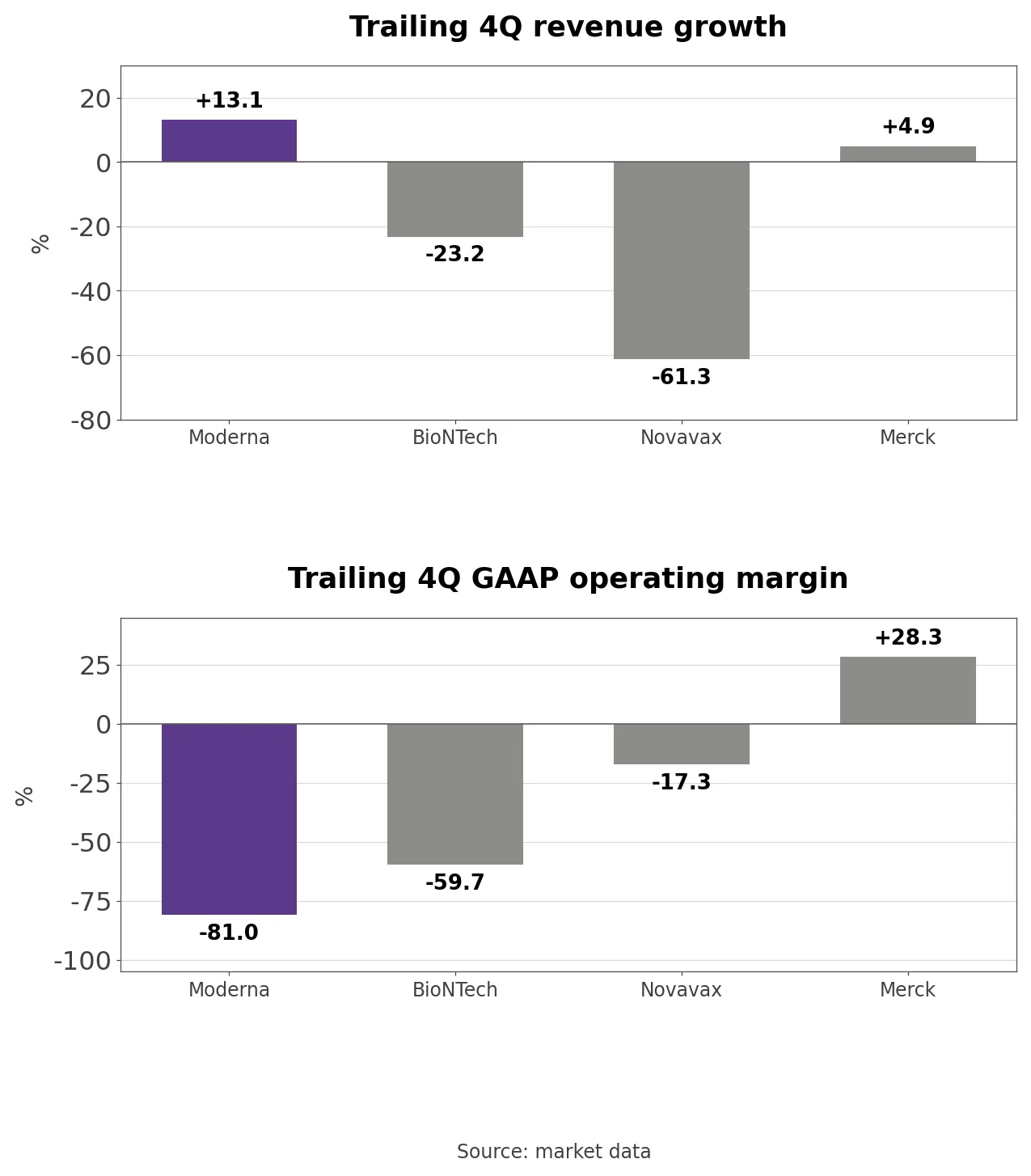
Trailing four-quarter revenue growth is highest at Moderna (+13.1%), followed by Merck (+4.9%), BioNTech (-23.2%) and Novavax (-61.3%). Only Merck has a positive trailing GAAP operating margin, at 28.3%, and Moderna’s -81.0% is the lowest of the four.
Trailing revenue growth and GAAP operating margin at Moderna BioNTech Novavax and Merck
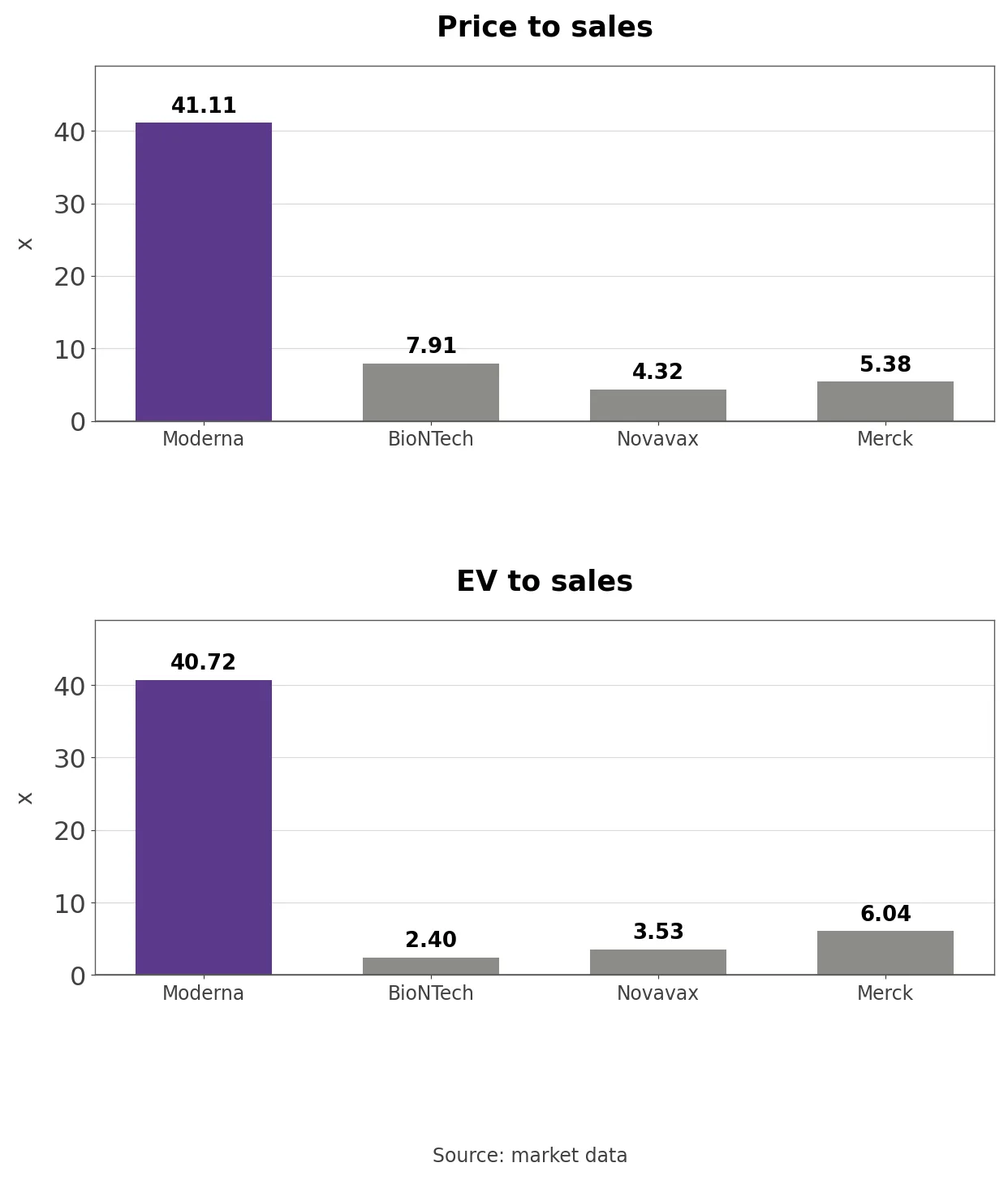
The multiples run the other way. Price to sales is 41.11 at Moderna, 7.91 at BioNTech, 5.38 at Merck and 4.32 at Novavax, which puts Moderna at 5.2 times BioNTech.
Price to sales and EV to sales at Moderna BioNTech Novavax and Merck
On enterprise value to sales the order is Moderna 40.72, Merck 6.04, Novavax 3.53 and BioNTech 2.40, because much of BioNTech’s market value is cash. Novavax has negative equity, so this multiple replaces price to book for the comparison, and BioNTech reports in euros, so only ratios are compared. Both mRNA companies lost most of their COVID revenue, yet BioNTech trades at 1.06 times book and Moderna at 14.16 times on market data.
The Price-to-Book and Price-to-Sales Band
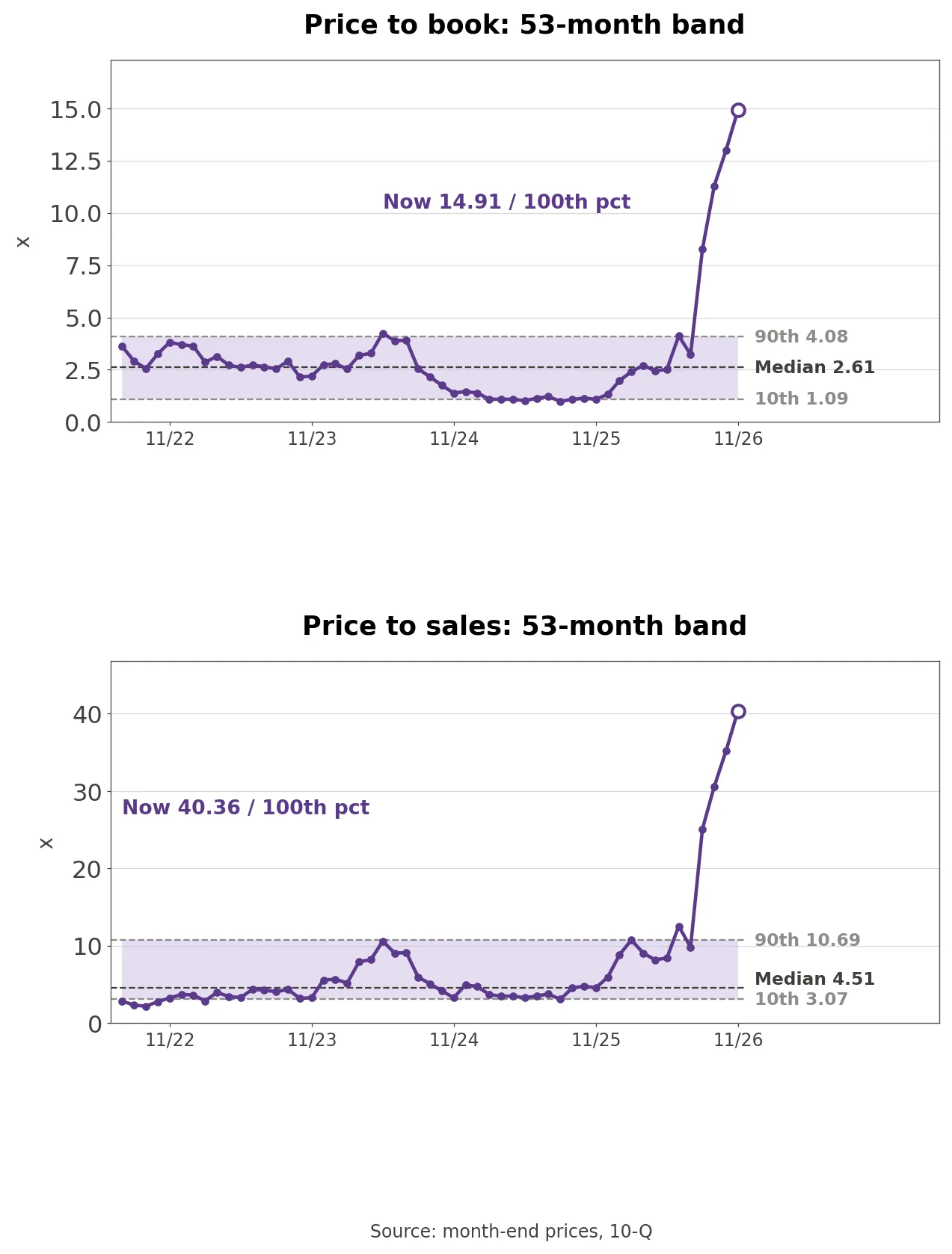
Trailing four-quarter GAAP net loss is $2.789 billion, so there is no P/E band. I calculated price to book and price to sales from month-end closes for 53 months starting in July 2022.
Moderna price to book and price to sales over 53 months
Price to book of 14.91 is 5.7 times the 53-month median of 2.61 and 3.5 times the previous high of 4.25 in May 2024. The low was 0.99 in August 2025, when the $9.347 billion market value was below the $9.399 billion of equity. Price to sales of 40.36 is also the highest in 53 months, against a median of 4.51. Equity has shrunk to $6.837 billion and revenue is about one-tenth of the COVID peak, so both denominators are small. The band cannot say whether the stock is cheap or expensive. It shows only that the market is paying for a pipeline that is not on the balance sheet.
Three Conditions That Move the Stock
The intismeran review is the first. Moderna aims to file this year and hopes for approval in 2027. FDA acceptance with priority review would pull the approval timeline forward and support the stock, while a filing that slips into next year or a manufacturing deficiency for the individualized process would weigh on it.
Fourth-quarter revenue is the second. The implied range is $388.6 million to $583.0 million. Revenue above the top would show the third-quarter strength was more than shipment timing and would support the stock, while revenue below $388.6 million would miss even the bottom of the full-year outlook and weigh on it.
The renal cell carcinoma Phase 2 is the third. The 282-patient trial against Keytruda alone is event-driven and could read out at the end of 2026 or early 2027. Berman said a very strong result could lead to an FDA filing. A second tumor type with lower recurrence risk would support the stock, while a miss on statistical significance at the first analysis would weigh on it.
The Intismeran Filing Timeline
Hoge said Moderna and Merck are working to complete the filing this year and hope for approval next year if everything goes well, while preparing for pre-approval inspections. Analyst Day at the Marlborough plant on November 12, an oral presentation of the multiple myeloma T-cell engager mRNA-2808 at the American Society of Hematology meeting on December 12, and registrational data in propionic acidemia expected in 2026 are the next dates. The norovirus vaccine missed the early-success criteria at its Phase 3 interim analysis, and Moderna is consulting regulators instead of enrolling another cohort.
The open question is how many patients Moderna can supply in the first year of a launch when every dose is made for one person, and at what cost.